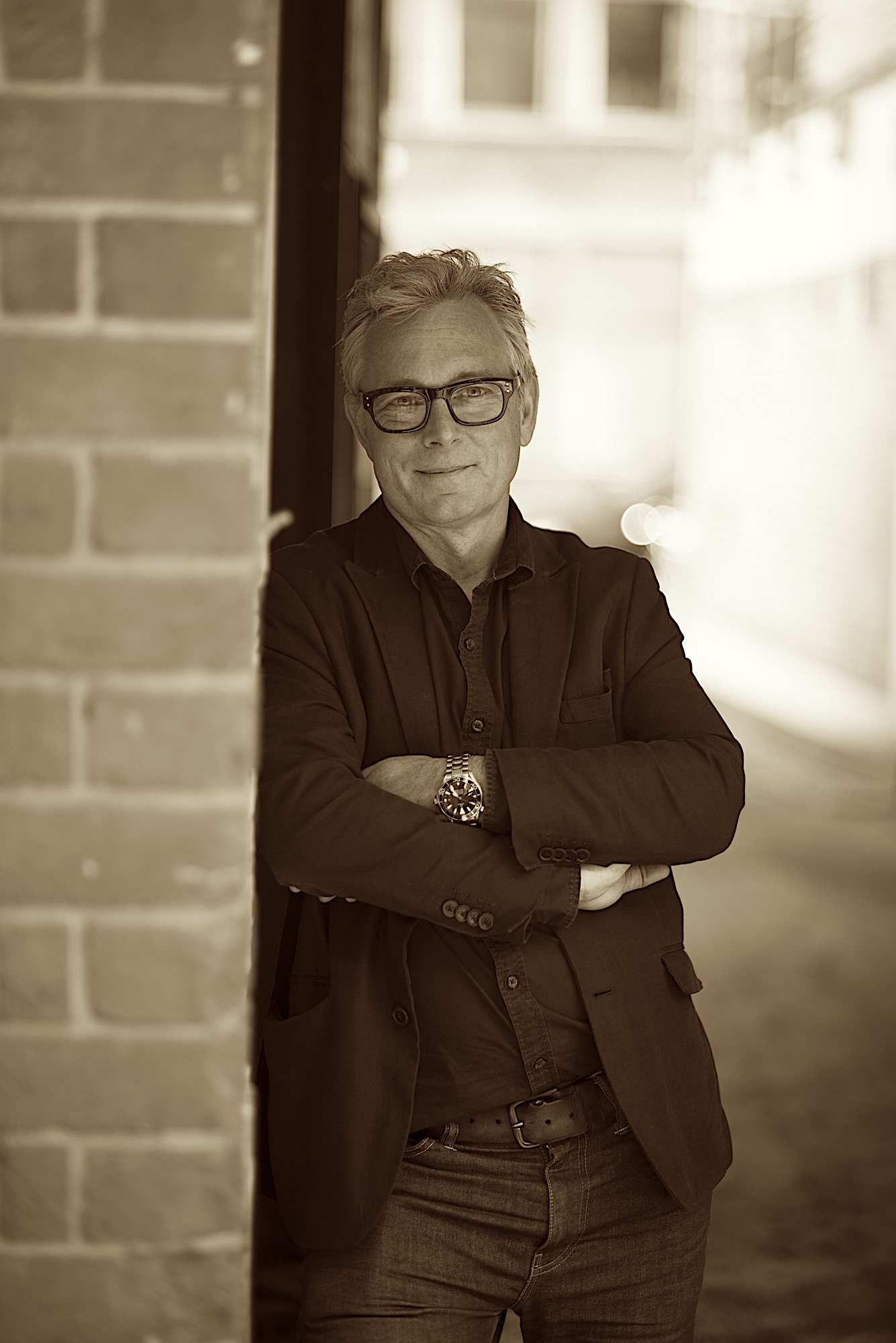
Mark’s poems have appeared in Poetry Review, The London Magazine, The Irish Times, MAGMA, Shearsman Magazine, The New European, The North, Stand, Southword, The Forward Book of Poetry, The Moth, The Morning Star and many more.
His second collection Other Saints Are Available was launched by Live Canon in 2022. A third is forthcoming from Broken Sleep in 2026.
The first The Rainbow Factory was published by Templar Poetry in 2016 following the success of his award-winning pamphlet The Chelsea Flower Show Massacre.
He is a winner of the Ledbury Poetry Prize, the Oxford Brookes University International Prize, the Plaza Poetry Prize and the Ruskin Prize. He is also a runner-up in the UK National Poetry Competition, the Bridport Prize, the Moth Prize, The Stephen Spender Translation Prize and the Robert Graves Prize. In Ireland, he has taken first prize at both the Westival and Dromineer Poetry Festivals.
Born in Northamptonshire of Scottish descent, he studied Philosophy at Merton College, Oxford University before working in Washington, D.C. as a journalist. He now travels between London, Dubai and Barcelona as a creative director and writer. He speaks Spanish and has recently been translating the work of Catalan poet Miquel Martí i Pol.
Some quotes:
“Mark Fiddes’s THE RAINBOW FACTORY is a wonder, a real work of art, from a poet who seems incapable of writing a bad poem. His sharpness, both linguistic and intellectual, makes his work uniquely satisfying…written in a voice that is rarely seen in poetry, the urbane humorist who sustains serious thought.”
Thomas McCarthy, leading Irish poet and academic.
“Quietly, and for some time now, Mark Fiddes has built a body of work which, surely, must mark him out as one of the finest poets of his generation. I say this without a hint of hyperbole. Each of his poems is an event in itself.”
Mark Anthony Owen, poet and publisher @iambapoet and @after_poetry
“…a cosmopolitan imagination and an urbane observational skill in the line of Ovid. His poems are deceptively unassuming on the outside, revealing deeper levels of relevance and symbolism long after consuming.”
Dr. James McCabe, The Story Doctor
“A precisely pitched and poised vignette, with a sharp eyed, disillusioned, deadpan humour, this achieves what poetry sometimes, rarely, can do: a simple, unforgettable image, small in itself, on which balances so much anxiety, and anxious hope, both for the region and the world.”
Philip Gross, poet, novelist, playwright and Professor of Creative Writing at the University of South Wales.
“I immediately admired the conceit of this poem and how patiently, quietly and precisely it was undertaken (in keeping with its subject). It was the poem I kept returning to, the one that most stayed with me as I read through the next few hundred submissions.”
Dr. Maya C. Popa, poet, author, lecturer at NYU and Poetry Editor of Publishers Weekly. Judge of the Ledbury Poetry Prize.
“The light but bitter ironies of the poem treat of a complex experience with a biting imperial joke at the end. I like the distance, the way the poem doesn’t cram me with preloaded emotion…It conveys what seems to me a genuine, interesting troubled state of mind brought about by both personal and national history.”
George Szirtes, poet, translator, winner of the T.S. Eliot Prize and judge of the Plaza Poetry Prize.
“A punk energy and impish sense of fun suffuse this fine new collection…compressed with wit and wonder. Purchase a copy of this intelligent, immaculately tended collection and you will find yourself in the company of a tour guide at once wickedly cynical, bleakly funny and always colourful.”
Christopher James, Winner of the National Poetry Prize.
“One of my favourite titles for a poetry collection, Mark Fiddes’ The Chelsea Flower Show Massacre is expectedly full of wit and wry observation on the strata of British society. But this book reaches deeper, into moments that catch you off guard with profound, plainspoken insight into the human condition. More than a hilarious romp (though it is that as well), this slim booklet packs a wallop, leaves you teetering through the poet’s off-kilter worldview.”
The Huffington Post.
“Its stately movement, its resolution of all the technical problems of a period and a persona piece, and the lovely lift into something transcendent with which it ends.”
Fiona Sampson, poet and Emeritus Professor at the University of Roehampton.
 Mark Fiddes