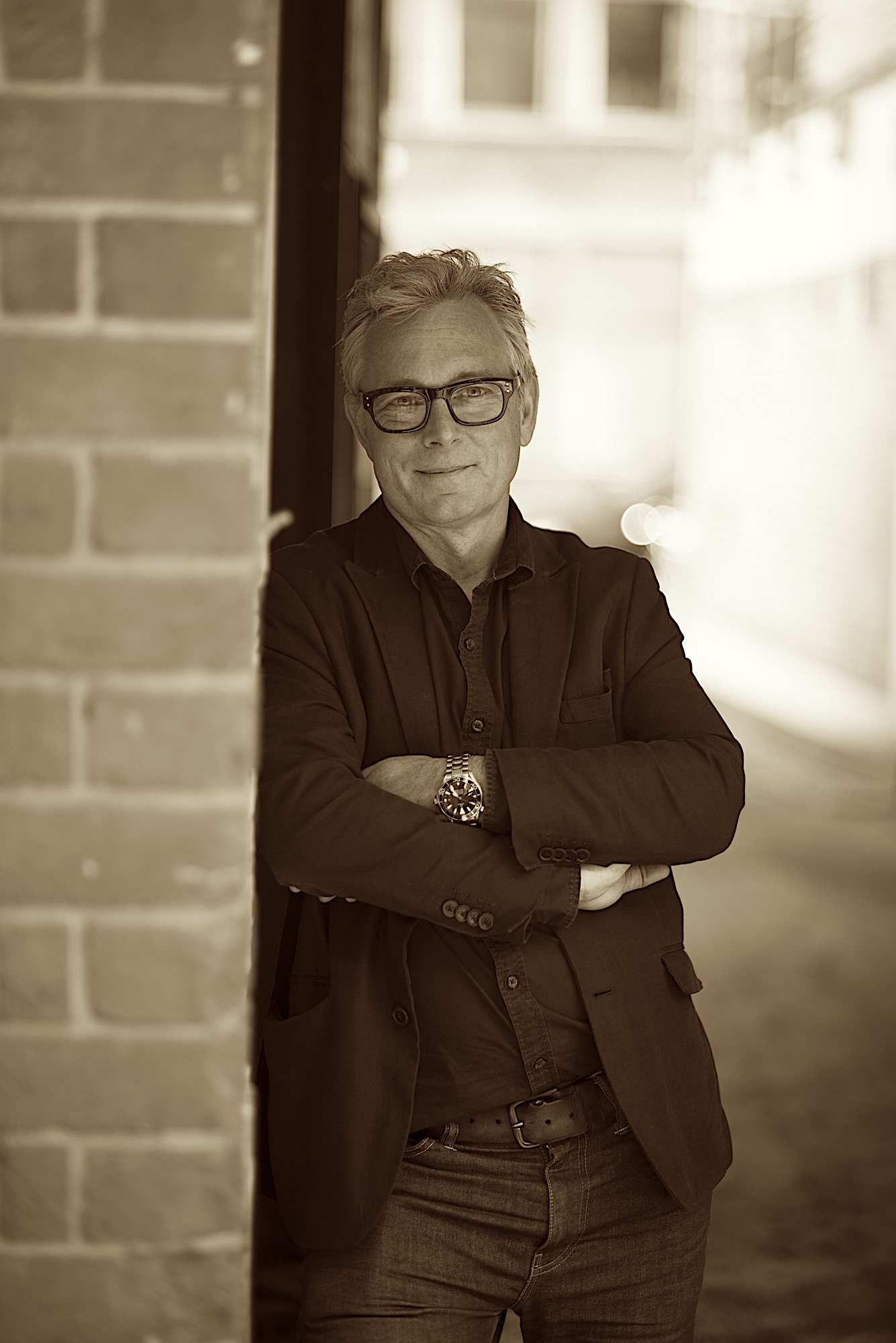
Mark’s poems have appeared in Poetry Review, The London Magazine, The Irish Times, MAGMA, Shearsman Magazine, The New European, The North, Stand, Southword, The Forward Book of Poetry, The Moth, The Morning Star and many more.
His third collection ‘Hotel Petroleum’ was launched by Broken Sleep in the summer of 2026.
This follows upon the success of Other Saints Are Available (Live Canon), The Rainbow Factory (Templar) and his award-winning pamphlet The Chelsea Flower Show Massacre.
He is a winner of the Ledbury Poetry Prize, the Oxford Brookes University International Prize, the Plaza Poetry Prize and the Ruskin Prize. He is also a runner-up in the UK National Poetry Competition, the Bridport Prize, the Moth Prize, the Keats Shelley Prize, The Stephen Spender Translation Prize and the Robert Graves Prize. In Ireland, he has taken first prize at both the Westival and Dromineer Poetry Festivals.
Born in Northamptonshire of Scottish descent, he studied Philosophy at Merton College, Oxford University before working in Washington, D.C. as a journalist. He now travels between London, Dubai and Barcelona as a creative director and writer. He speaks Spanish and has recently been translating the work of Catalan poet Miquel Martí i Pol.
This autumn, he is writer-in-residence for Prague UNESCO City of Literature, living in Kafka’s House and working on a set of poems commemorating Václav Havel, first President after the Velvet Revolution.
Some comments:
“Mark Fiddes’s THE RAINBOW FACTORY is a wonder, a real work of art, from a poet who seems incapable of writing a bad poem. His sharpness, both linguistic and intellectual, makes his work uniquely satisfying…written in a voice that is rarely seen in poetry, the urbane humorist who sustains serious thought.”
Thomas McCarthy, leading Irish poet and academic.
“This collection (Hotel Petroleum) is a rousing hymn to simultaneity – the quantum entanglement of things in our connected world. Poems strike sparks of presence as they touch particular ground in any continent, in many registers, with patterns of global economics showing up immediate as forces of nature, observed with a naturalist’s attention to detail. This is a sensibility that is conversant with it all – deft, fiercely well-informed, humane, appalled, amused, satirical and rightly unwilling to let urgent matters rest.”
Philip Gross. Poet, novelist, T.S. Eliot Prizewinner and Emeritus Professor of Creative Writing at the University of South Wales.
“Mark Fiddes is a poet of rare composure and accomplishment. The poems in Hotel Petroleum travel widely, through hotel rooms and airports, deserts and cities, newsrooms and war zones, yet they are always anchored by a voice that is urbane, inquisitive and unmistakably his own. Here are poems alive to the strange theatre of contemporary life: its politics and technologies, its dislocations and sudden beauty. There is wit here, bite, and moments of true lyric grace. Above all there is craft, the sense of a poet who knows exactly what he is doing. Fiddes is the real deal, at the height of his powers.”
The Madrid Review
“It is very welcome to see so many award-winning poems brought together in this new collection by Mark Fiddes. Adeptly fusing reportage with lyric, Hotel Petroleum offers an intelligent, moving and human insight to lives lived during conflict, captured in a series of memorable encounters, each weighted with meaning and reflection.”
Dr Rebecca Goss. Poet, tutor, mentor, winner of the Sylvia Plath Prize and writer of four collections of poetry including Girl and Latch (Carcanet).
“I immediately admired the conceit of this poem and how patiently, quietly and precisely it was undertaken (in keeping with its subject). It was the poem I kept returning to, the one that most stayed with me as I read through the next few hundred submissions.”
Dr. Maya C. Popa, poet, author, lecturer at NYU and Poetry Editor of Publishers Weekly. Judge of the Ledbury Poetry Prize.
“The light but bitter ironies of the poem treat of a complex experience with a biting imperial joke at the end. I like the distance, the way the poem doesn’t cram me with preloaded emotion…It conveys what seems to me a genuine, interesting troubled state of mind brought about by both personal and national history.”
George Szirtes, poet, translator, winner of the T.S. Eliot Prize and judge of the Plaza Poetry Prize.
“Its stately movement, its resolution of all the technical problems of a period and a persona piece, and the lovely lift into something transcendent with which it ends.”
Fiona Sampson, poet and Emeritus Professor at the University of Roehampton and judge of the Ruskin Prize.

